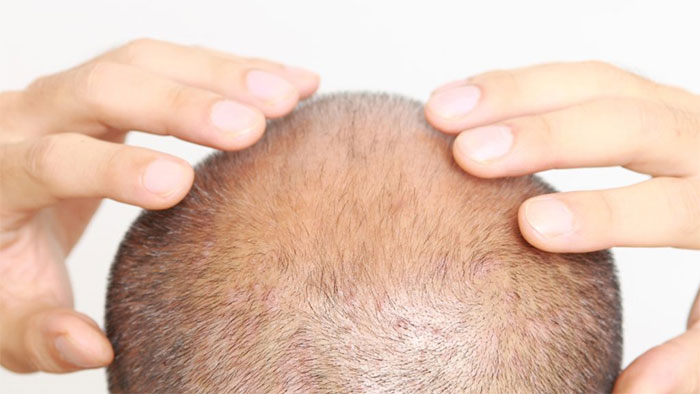
Losing your hair can be heartbreaking, but the silver lining is the numerous interventions available to regrow that lost hair. Depending on the condition, different treatment paths are explored to encourage regrowth and prevent further recession. Androgenetic alopecia, alopecia areata, and traction alopecia are three of the most prevalent causes of hair loss, each requiring their own approaches to rebuilding fullness and preventing further recession.
Androgenetic Alopecia Intervention
This prevalent male and female pattern baldness is commonly hereditary due to testosterone receptors making hair follicles shrink over time.
In men it typically begins with a receding hairline and bald spot growth on the crown, while women experience thinning on their top of their scalp. Eventually this condition can leave someone completely bald, unless arrested.
The objectives of pharmaceutical intervention are arresting further recession and promoting regrowth wherever possible. Minoxidil (Trade name: Rogaine), a topical solution, is indicated in receding hairlines as it can revitalize dormant follices. Finasteride is another popular medication, which counteracts androgenetic alopecia by inhibiting the conversion of testosterone to dihydrotestosterone (DHT), a hormone which damages hair follicles. Hair transplants are also an option for those seeking a permanent resolution, as they graft healthy hair follicles to bald patches and the transplanted hair will keep growing provided the person maintains good hair care. Laser helmets, microneedles and medicated shampoos can also be used in conjunction to promote regrowth.
The primary priority for people with androgenetic alopecia should be commitment to an intervention, as most require long-term or even lifelong medication to maintain results.
Alopecia Areata Treatment
This condition results in patchy, spontaneous bald spots, typically the size of a quarter. Sometimes the hair grows back on its own after a few months, although in the more severe cases the recipient may lose all of their hair on their head (alopecia totalis) or even their entire body (alopecia universalis).
Alopecia areata is today considered an autoimmune and inflammatory disease. Genes play a role in determining susceptibility, but the exact triggers are unknown, although recent research suggests it is caused by a malfunction of the immune system attacking the hair follicles after a precipitating event, such as a virus.
The treatment objectives for alopecia areata involve arresting further loss of hair. This autoimmune assault, combined with loss of normal hair follicle stimulation, causes hair growth to halt. Re-growing lost hair is also an objective for as many of the afflicted as possible. This will be accomplished by suppressing the autoimmune response, suppressing inflammation around the follicles, and restarting follicle growth if it is dormant. The specific approach will vary depending on the rate of progression, the pattern, and other factors. Let us examine what treatment options dermatologists have today to manage alopecia areata.
Topical and Injectable Therapies
The first interventions for mild alopecia areata are usually topical corticosteroids, which suppress the autoimmune response and help regrow hair follicles.
In addition to corticosteroids, other topical agents have been found to help alopecia areata.
Immunotherapy agents include diphencyprone, which works by provoking an allergic reaction, which helps retrain the immune system; and various other compounds such as phototherapy with laser combs, and platelet rich plasma injections. Injections can also be administered straight into bald patches.
Injections can administer steroids to suppress the autoimmune response, and platelet rich plasma which promotes healing wherever it is injected. They can also be used to target individual bald patches.
Oral and Intravenous Medications
Rapidly progressive alopecia areata requires prescription medication, which affects the entire body.
Corticosteroids such as prednisone are powerful immunosuppressants that can turn off an autoimmune response. Additional medications include Janus kinase inhibitors such as ruxolitinib and baricitinib, and biologics such as tofacitinib that modify the immune system.
Hair Transplant Surgery
The transplanted follicles are completely resistant to destruction by the autoimmune system.
Alopecia recipients often pursue this intervention in combination with the ones enumerated above, seeking an optimal hair regrowth solution. A skilled hair transplant surgeon can artfully place follicular grafts in thinning regions at angles that create a natural illusion, mimicking healthy hair growth. The transplanted strands, once established, will continuously regenerate provided the person maintains decent hair care. This is an effective treatment for resistant patches of alopecia areata.
Wigs, Scars and Confidence
While wigs, scalp micropigmentation and similar cosmetic procedures do not actually regrow the hair, when combined with continued medication they can help the recipient retain confidence, which is crucial since alopecia areata is a stressful condition.
The outlook for people suffering from alopecia areata is steadily improving, as new agents are being introduced which suppress the immune system for years, promoting extended remission. With the proper dermatological intervention, most patients will be able to return to their former hair density and maintain it despite the genetic predisposition.
Traction Alopecia Treatment
Traction alopecia results from styles that inflict damage on hair follicles, such as tight braids, buns, and extension or weave hair.
Although traction alopecia generally responds well to intervention in its earlier stages, when the offending tight styles have been abandoned it can also progress to complete baldness if left alone. Let us examine what options are available to treat this condition.
What Is Traction Alopecia?
Hair loss from traction alopecia is classified as acquired alopecia, secondary to pulling on the hair shafts. The excessive and prolonged tensile force applied to the follicles, such as from tight hairstyles, leads to hair thinning and bald patches along the hairline as the follicles become irreversibly damaged.
As initially occurs, there are scattered areas of reduced hair density with fine and short hair regrowth. Over time the bald patches can grow in size and become permanently bald. Traction alopecia commonly affects African-American women, but can afflict anybody of any race. The sooner the recipient takes measures against traction alopecia, the better the odds against developing bald spots.
Mitigation Measures and Medications:
The first and the most important intervention against traction alopecia is the minimization or eradication of the inducing factor such as braids and tight ponytails, since once the follicles are traumatized it is too late. If tighter styles are preferred to allow natural hair to grow, ensuring they are installed by a professional who can minimize trauma to the follicles is also recommendable. Refraining from harsh chemical processes to the hair is also advised.
Topical minoxidil may be used in the bald spots, and can help regrow hair in the afflicted area when administered twice-a-day. Corticosteroid injections can help promote healing once administered. Microneedling with platelet rich plasma, another innovative treatment, has shown promise as well. These interventions are somewhat successful in reactivating dormant follicles which may have been traumatized months or years earlier, but treatment should be continuous for several months as results are slow but lasting.
Surgical Hair Restoration
Hair transplants may be used to regenerate hair in completely bald regions, by implanting follicular grafts at angles and positions mimicking natural appearing hair. They are typically reserved for areas where natural hair regrowth has not occurred, as the transplanted follicles respond to the scalp conditions just like natural ones.
Cosmetics to Cover Bald Patches:
Alopecia recipients can use wigs, toupees, or semi-permanent scalp micropigmentation makeup to cover bald spots. They are useful to both men and women, as the treatment process can take awhile and the recipient will want to avoid being noticed.
Optimal Hair Care for Traction Alopecia Prevention:
If detected early enough, traction alopecia can be mitigated in its infancy by eliminating damaging styling practices. Teaching young girls to wear gentler styles is the surest protection against developing traction alopecia. Similarly, keeping away from chemical processing will also assure healthy hair growth at the hairline.
Hair regrowth and reconstruction with traction alopecia can often be encouraged by practicing optimal hair care. A patient’s diligence and adherence to instructions are crucial for the successful outcome of treatment of this condition. Detecting traction alopecia early enough and eliminating damaging practices is paramount in resolving this condition.