
Cinnamon is inexpensive, common, and right now in the kitchen. These are all qualities of an ingredient that can be turned into an internet myth. Pour a spoonful into tea, stir in some honey and wait half an hour – and it will all change your sex life.
Well, it won’t.
Cinnamon does contain biologically active substances. Researchers have even explored its potential to affect blood sugar, inflammation, and blood circulation. However, the moment the question is asked more specifically – does cinnamon really improve erection or sexual desire? – there are few studies to back that claim.
Can cinnamon help with an erection?
If you Google “does cinnamon improve erection quality,” the results will mostly discuss enhanced blood circulation and, therefore, better erection. That is not untrue, exactly, but the connection is stretched.
It is true that cinnamon may positively affect blood circulation. It is also true that good blood circulation is essential for an erection. However, the first fact does not prove the second. Most of the research that goes into these headlines is done in test tubes or on animals. When it comes to the human body, the results of such experiments become merely a reference point.
In short, relevant clinical trials that would prove that half a teaspoon of cinnamon in the morning will improve erection quality are currently unavailable.
That does not mean that diet has no effect on erection. On the contrary: diabetes, high blood pressure, and high cholesterol can all damage blood vessels and reduce erection quality. So can smoking and obesity. In this respect, cinnamon can be part of a healthy diet. However, it does not replace standard ed treatments. If problems with erection persist or recur, blood pressure, sugar levels, and cardiovascular risk factors should be measured.
Same with libido: if a person feels that their sexual desire has decreased, they should consult a doctor. There are many reasons for this – from depression to shifts in relationships or side effects of drugs. Painful intercourse and hormonal changes also suppress libido. Cinnamon does not affect any of these causes.
Of course, cinnamon tea can help to soothe and relax after a busy day. The warm flavors of cinnamon, ginger, or other spices are often associated with coziness and sensuality. This association is subjective, but it is real – and it might improve a couple’s mood and romantic interest. However, the location does not appear to have had much to do with it.
Does cinnamon increase testosterone?
There are studies that prove that extracts of cinnamon have a positive effect on testosterone levels and sperm characteristics in rats. This is the basis for many of the claims found in online articles. However, a concentrated extract of cinnamon is not the same thing as a cup of cinnamon tea.
Researchers have yet to prove that regular doses of cinnamon have a clinically significant effect on testosterone in men. Until then, it cannot be used to treat testosterone deficiency. The same applies to claims that cinnamon lowers testosterone: this could be a coincidence, or it could be related to a decrease in libido or overall health.
Testosterone levels should not be judged by one criterion. Low desire alone is not a reason to suspect testosterone insufficiency. Doctors usually look at a combination of symptoms: reduced morning erections, fatigue, loss of muscle mass or vitality, or fertility problems. Finally, morning blood tests that are consistently low. Our guide to increasing testosterone will help you find out which of these factors is more relevant to your situation.
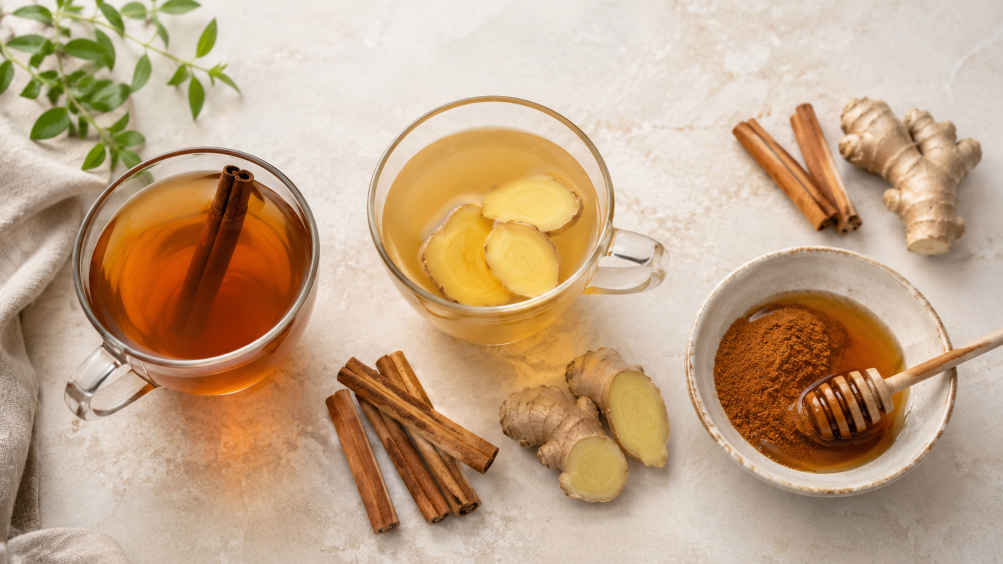
Cinnamon tea with ginger and honey
Cinnamon tea sexually benefits people as a caffeine-free, low-calorie sweet snack, if it isn’t too sweet. It has no significant “pre-sex” effects. A cup of cinnamon with ginger and honey is even less likely to have them, since the spice is diluted with root and sweetened with sugar.
It can still be part of a healthy diet and improve well-being: both ginger and cinnamon are being studied for their potential effects on the endocrine system. No concrete evidence of a direct effect on sex hormones has been found – but that doesn’t mean it exists. As for honey, its addition to cinnamon tea is mainly flavor.
A popular alternative is cinnamon and honey: the sweetener, combined with spices, supposedly increases libido and helps with erectile dysfunction. Neither of these effects has been confirmed, but the dose of sugar in such a drink can be significant. It should also be noted that some sexual enhancement honeys have been found to contain hidden sildenafil or tadalafil – active ingredients from viagra or cialis. When such an addition produces unexpected results, the role of cinnamon is debatable.
How much cinnamon is too much
The amount of cinnamon needed to season food is completely safe. The potential risks are associated with regular ingestion of large doses of the spice or capsules. Cassia cinnamon, which is sold in supermarkets, contains coumarin – a substance that can be harmful to the liver in high doses. This danger is primarily relevant to people with existing liver disease. Ceylon cinnamon contains much less coumarin – but it also has not been proven to be superior in terms of sex hormones.
Cinnamon can also irritate the oral mucosa and stomach, and affect blood sugar levels. With diabetes, blood clotting disorders, or the simultaneous use of several drugs, it is dangerous to exceed the recommended doses of any supplement. This is especially important to note in relation to cinnamon: interactions with drugs and a high dose of coumarin can be hazardous to health.
Finally, it makes no sense to massage cinnamon powder or oil into the genital area in order to improve blood circulation and, therefore, erection quality. On the contrary, it can cause a severe chemical burn on the sensitive tissue of the genitalia.
Enjoy your cinnamon in the morning: in coffee, in tea, in oatmeal. But do not expect miracles from this miracle spice: it will not raise testosterone, improve erection, or increase libido. However, it will harm no one if they are in the cupboard.