
Categories
Blog/Sexual Health

Does Testosterone Help You Live Longer? The Truth About TRT and “T-Maxxing”

Testosterone therapy can help men with confirmed hypogonadism, but can it extend life? Here is what current research reveals about TRT, T-maxxing, fertility, cardiovascular safety, and anti-aging claims.

Testosterone therapy can help appropriately diagnosed men, but it is not a proven shortcut to a longer life.

Testosterone has acquired a strange new identity.

It is no longer discussed only in fertility clinics, endocrinology offices, or conversations between older men and their doctors. Online, testosterone has become a shorthand for almost everything men are told they should want: strength, confidence, sharper thinking, better sex, less body fat, more muscle, and—according to a surprisingly common belief—a longer life.

A 2026 Men’s Health survey of 2,200 men found that 54% believed having high testosterone could help them live longer. Nearly half viewed testosterone as a measure of masculinity, while more than one-third believed higher levels made men better-looking. Only about a third said they turned to doctors for testosterone information. Many relied instead on friends, social media, podcasts, forums, and influencers.

That would be less concerning if the online conversation stopped at exercise and sleep. It often does not. Testosterone clinics advertise vague promises of “optimization.” Influencers present hormone injections as part of an anti-aging routine. Younger men compare laboratory results as if testosterone were a fitness score, with the highest number winning.

The trend even has a name: T-maxxing.

There is a piece of truth underneath the hype. Testosterone is essential for male health, and genuinely low levels can affect sexual desire, bone density, muscle mass, red-blood-cell production, mood, and energy. Men with confirmed hypogonadism may benefit significantly from medically supervised testosterone replacement therapy.

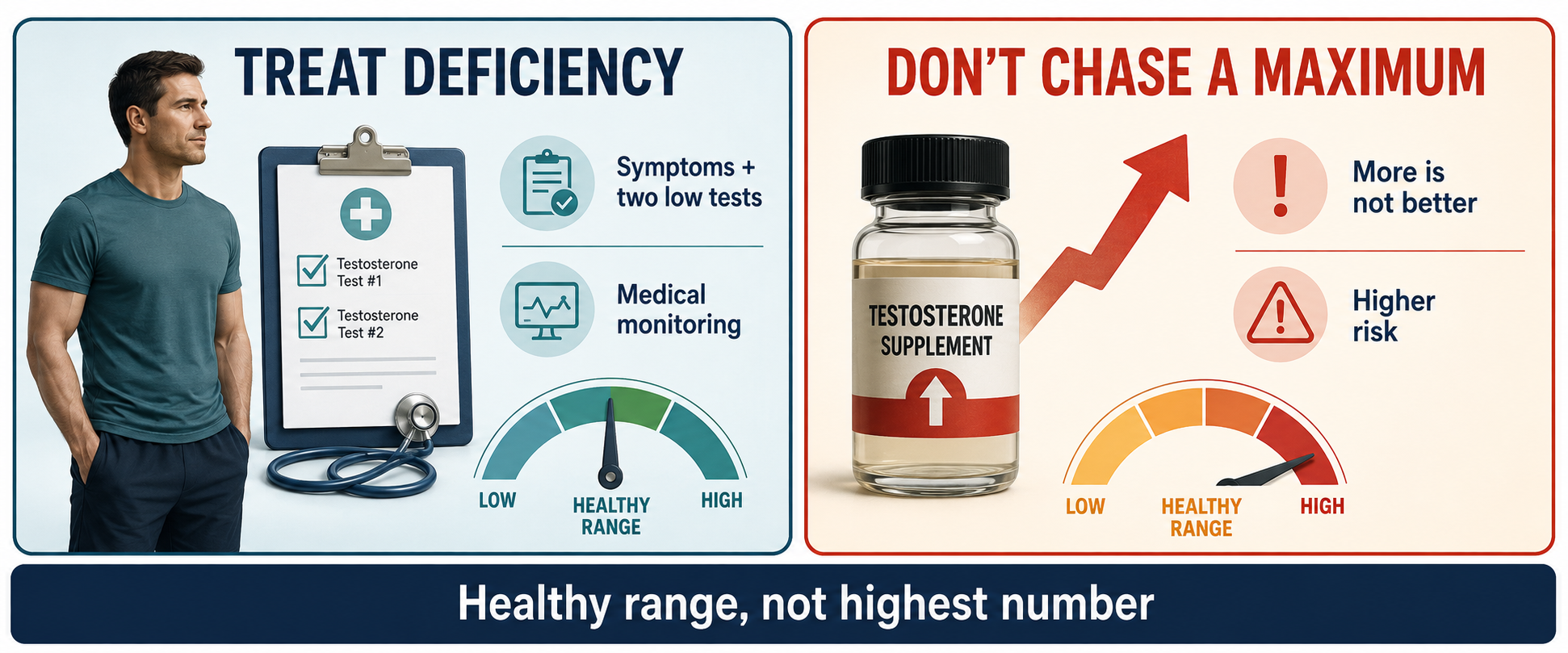
But treating a deficiency and chasing the highest possible testosterone level are not the same thing.

Low testosterone is associated with poorer health and, in some studies, a higher risk of death. That does not prove that testosterone injections make healthy men live longer. Often, low testosterone is a warning light for another problem—obesity, diabetes, serious illness, poor sleep, or declining overall health—rather than the single cause of it.

So, does testosterone help you live longer? Current evidence cannot support that promise. For the right patient, TRT may improve symptoms and quality of life. It has not been proven to extend lifespan, reverse normal aging, or provide a longevity advantage to men whose testosterone is already normal.

Why testosterone became an anti-aging obsession

Testosterone has always carried cultural weight. It is associated with puberty, muscle development, facial hair, sexual desire, and male reproductive function. That made it easy to turn a medical hormone into a symbol of masculinity.

Social media pushed the idea further.

The modern testosterone pitch rarely sounds like a traditional medical advertisement. It usually begins with symptoms broad enough to describe almost any tired adult: low motivation, stubborn body fat, reduced confidence, brain fog, poor sleep, irritability, or slower gym progress.

Have you lost some energy since your twenties? Testosterone may be the answer. Are you less interested in sex after a stressful month? Check your testosterone. Do you dislike how you look in photographs? Perhaps you need “optimization.”

This language is effective because the symptoms are real, but they are not specific.

Fatigue can result from sleep apnea, depression, anemia, thyroid disease, diabetes, medication side effects, chronic stress, alcohol use, inadequate nutrition, or simply not sleeping enough. Erectile difficulties may involve blood vessels, nerves, anxiety, relationship stress, or cardiovascular disease. Loss of muscle can reflect inactivity and aging rather than a hormonal disorder.

Testosterone sometimes contributes. It should not automatically receive all the blame.

The T-maxxing version of the story goes beyond correcting low testosterone. Its goal is to push levels toward the upper end of the laboratory range—or occasionally beyond it—in pursuit of a stronger, leaner, more dominant version of oneself.

That is where medicine gives way to experimentation.

A healthy testosterone range is not a competition. Hormones work within regulated systems, and more is not always better. Insulin is essential, but excessive insulin is not healthier. Thyroid hormone keeps the body functioning, but too much can damage the heart and bones. Testosterone follows the same basic principle.

The medical goal is to correct a confirmed deficiency and relieve symptoms—not to chase the highest laboratory number.

What testosterone actually does in the body

Testosterone is produced mainly in the testicles, with a small amount coming from the adrenal glands. Its production is controlled through communication between the hypothalamus, pituitary gland, and testicles.

The hypothalamus releases gonadotropin-releasing hormone. This signals the pituitary gland to release luteinizing hormone and follicle-stimulating hormone, usually shortened to LH and FSH. LH tells the testicles to produce testosterone, while FSH works alongside testosterone to support sperm production.

Testosterone helps maintain muscle and bone, contributes to libido, supports red-blood-cell production, influences fat distribution, and plays a role in mood and energy. During puberty, it drives changes such as a deeper voice, facial hair, and development of the male reproductive system.

Levels do not remain fixed throughout life. Testosterone is generally highest in early adulthood and tends to decline gradually with age. FaastPharmacy notes that levels may fall by roughly 1% per year after age 40, although most older men remain within the standard range.

Daily variation matters too. Testosterone is usually highest in the morning and lower later in the day. Poor sleep, acute illness, severe calorie restriction, and certain medications can temporarily suppress it.

This is why one low result—especially from an afternoon blood draw—is not enough to diagnose testosterone deficiency.

A man may also have low total testosterone because obesity or insulin resistance has reduced sex hormone-binding globulin, the protein that carries much of the hormone in the blood. In some cases, free testosterone may be more informative, although it also needs to be measured and interpreted carefully.

Testosterone is biologically important. The challenge is determining when a low result reflects a real disorder, when it represents a reversible response to poor health, and when it is simply a misleading snapshot.

Does low testosterone mean a shorter life?

Numerous observational studies have found that men with low testosterone are more likely to experience cardiovascular disease, metabolic problems, frailty, and earlier death. At first glance, that seems to suggest that raising testosterone should improve survival.

The problem is causation.

Observational research can show that two things occur together. It cannot always tell us which one caused the other.

Men with obesity, type 2 diabetes, chronic kidney disease, inflammatory illness, poor nutrition, and severe general illness frequently have lower testosterone. These same conditions also increase the risk of death.

Low testosterone may therefore be partly a marker of declining health. The underlying disease could be lowering testosterone and shortening life at the same time.

Imagine arriving at a house and seeing firefighters outside. Firefighters are strongly associated with burning buildings, but they did not usually cause the fire. The association is real; the interpretation requires context.

Testosterone may work similarly in some studies. A low level can signal that something is wrong without being the single force driving the outcome.

This does not mean low testosterone is irrelevant. Genuine hypogonadism can contribute to reduced bone density, loss of muscle, anemia, sexual symptoms, and poor quality of life. Treating it may help. But an association between low testosterone and mortality does not prove that pushing testosterone higher will add years to a man’s life.

Researchers would need long, randomized trials specifically designed to compare mortality among men receiving testosterone and placebo. Most testosterone studies have focused on symptoms, sexual function, body composition, anemia, bone density, or cardiovascular safety rather than lifespan.

At present, there is no solid clinical evidence that TRT functions as a longevity drug.

What the TRAVERSE trial actually found

Anyone researching testosterone online will eventually encounter the TRAVERSE trial. It is frequently used to make one of two sweeping claims: either TRT is completely safe for the heart or testosterone is dangerous and should be avoided.

Neither interpretation captures the study properly.

TRAVERSE was a large randomized trial involving more than 5,000 middle-aged and older men with symptoms of hypogonadism, repeatedly low testosterone, and existing cardiovascular disease or an elevated cardiovascular risk. Participants received testosterone gel or placebo and were followed for cardiovascular outcomes.

The study found that testosterone was noninferior to placebo for major adverse cardiovascular events—a combined measure including cardiovascular death, nonfatal heart attack, and nonfatal stroke.

In everyday language, the trial did not find a higher rate of those major events in the testosterone group within the study’s follow-up period.

That was reassuring. It did not show that testosterone prevented heart attacks, extended life, or made healthy men safer. It showed that properly prescribed testosterone gel did not produce an unacceptable increase in the trial’s primary cardiovascular outcome among appropriately selected men with confirmed hypogonadism.

Certain adverse events, including atrial fibrillation, acute kidney injury, and pulmonary embolism, occurred more often in the testosterone group. These findings require context, but they should not be erased when the study is summarized.

The participants were also medically monitored. Their experience does not automatically apply to a 28-year-old using high-dose testosterone from an online source, combining it with other anabolic drugs, or adjusting the dose based on gym performance.

The FDA later removed the boxed warning concerning an increased risk of major adverse cardiovascular events from testosterone labels after reviewing TRAVERSE. At the same time, the agency required class-wide warnings that testosterone products can increase blood pressure. The FDA explains the testosterone-labeling changes.

That combination tells the real story better than either extreme. Cardiovascular fears surrounding medically supervised TRT became less alarming, but testosterone did not become risk-free—or an anti-aging treatment.

Who may genuinely benefit from TRT?

Testosterone replacement therapy is intended for men with hypogonadism: symptoms or signs of testosterone deficiency combined with consistently low testosterone caused by a problem affecting the testicles, pituitary gland, or hypothalamus.

Depending on the individual, symptoms may include:

  • Reduced sexual desire
  • Fewer spontaneous or morning erections
  • Loss of body hair
  • Reduced muscle mass
  • Low bone density
  • Unexplained anemia
  • Infertility
  • Hot flashes in severe cases
  • Low energy or depressed mood

The last two are less specific. A man should not be diagnosed solely because he feels tired.

The Endocrine Society recommends confirming low testosterone with repeat morning testing using an accurate laboratory method. Doctors may also check LH, FSH, prolactin, SHBG, free testosterone, thyroid function, iron markers, or other tests to identify the cause.

Consider two men who both receive a total testosterone result of 260 ng/dL.

The first has reduced libido, repeated low morning results, a pituitary disorder, and inappropriately low LH. The second slept four hours, tested late in the afternoon, recently recovered from influenza, and has no sexual symptoms.

The laboratory number is the same. The medical meaning is completely different.

When hypogonadism is properly diagnosed, TRT may improve sexual desire, correct certain cases of anemia, increase bone density, and produce modest increases in muscle mass. Some men report better mood or energy, although responses vary.

TRT is not equally effective for every symptom marketed by commercial clinics. It does not reliably transform motivation, erase ordinary aging, cure every case of erectile dysfunction, or guarantee fat loss.

It should solve a documented hormonal problem—not become the automatic answer to general dissatisfaction.

Why many men may be treated without enough testing

Research presented at the Endocrine Society’s 2026 annual meeting raised concerns that testosterone therapy is often prescribed without guideline-concordant evaluation.

Only a small proportion of men in the study received all the recommended diagnostic testing before treatment. Some may have started TRT without repeated testosterone measurements or sufficient investigation of the underlying cause. The Endocrine Society summarized the findings.

The commercial model helps explain why.

A clinic promising optimization benefits financially when a patient begins long-term therapy. A careful evaluation may reveal that the real problem is sleep apnea, depression, obesity, medication use, or uncontrolled diabetes. Treating those conditions takes time and may not involve a monthly testosterone subscription.

Telemedicine can provide excellent care when clinicians follow appropriate standards. The issue is not that an appointment happens through a screen. It is whether the service performs a serious medical evaluation, confirms the diagnosis, discusses fertility, reviews contraindications, and provides ongoing monitoring.

Be cautious when a clinic:

  • Diagnoses low testosterone from a single test
  • Treats a laboratory number without asking about symptoms
  • Promises anti-aging or longer life
  • Encourages unusually high target levels
  • Avoids discussing fertility
  • Bundles testosterone automatically with several other hormones
  • Offers little follow-up beyond renewing prescriptions
  • Presents every common symptom as proof of “Low T”

A good clinician should be willing to tell a patient that testosterone is not the answer.

Testosterone and male fertility: the risk many men miss

One of the biggest misunderstandings about TRT is the belief that testosterone should increase sperm production. After all, testosterone is a male reproductive hormone. Wouldn’t adding more improve fertility?

Usually, the opposite happens.

External testosterone raises the hormone level in the bloodstream. The brain senses that enough testosterone is present and reduces the release of LH and FSH. With weaker signals reaching the testicles, natural testosterone production inside the testicles falls.

Sperm production may decline sharply. Some men develop azoospermia, meaning no sperm are detected in the semen.

The blood test may look impressive while fertility quietly deteriorates.

This is especially relevant to younger men who begin TRT for energy, appearance, or gym performance without being asked whether they hope to have children. The Endocrine Society recommends against starting testosterone in men planning fertility in the near term.

Recovery is often possible after treatment stops, but it may take months and is not equally predictable for everyone. Duration of use, dose, age, baseline testicular function, and exposure to other anabolic drugs can influence recovery.

A man who wants children should discuss fertility before the first dose—not after a semen analysis comes back at zero.

Depending on the cause of low testosterone, a reproductive urologist may consider other approaches intended to support the body’s own hormone production. These treatments are not appropriate for every patient and should not be self-prescribed.

Testosterone’s effect on sperm also shows why “more testosterone” is such a poor health philosophy. A higher bloodstream level can coexist with smaller testicles and severely suppressed fertility.

Does TRT improve erectile dysfunction?

Sometimes, but not as reliably as advertising suggests.

Low testosterone can reduce sexual desire and may contribute to erection problems. Men with confirmed deficiency may experience better libido and some improvement in sexual function after treatment.

Yet erections depend heavily on blood flow and nerve function. Diabetes, high blood pressure, atherosclerosis, smoking, pelvic surgery, neurological disease, anxiety, and medication effects can all cause ED even when testosterone is normal.

TRT is unlikely to fix a blocked artery or reverse significant diabetic nerve damage.

A man with low libido and low testosterone may respond differently from a man who wants sex but cannot maintain an erection. The first problem may be more hormone-sensitive. The second may require cardiovascular evaluation or established erectile dysfunction treatments.

ED can also serve as an early warning sign of vascular disease. Treating it as nothing more than “Low T” may delay the diagnosis of a more serious problem.

Men often worry that sexual activity or masturbation drains testosterone. Research does not support the idea that ordinary masturbation causes chronically low testosterone. Our guide to masturbation and testosterone explains why temporary hormonal fluctuations should not be confused with a lasting deficiency.

The risks of chasing high testosterone

Medically supervised testosterone therapy and unsupervised T-maxxing occupy very different risk categories. Still, even prescribed testosterone requires monitoring.

Rising blood pressure

Ambulatory monitoring studies found that testosterone products can increase blood pressure. The average increase may sound modest, but blood-pressure changes matter over years, particularly in men who already have hypertension or cardiovascular risk factors.

This is why the FDA now requires class-wide blood-pressure warnings for testosterone products.

Elevated hematocrit

Testosterone stimulates red-blood-cell production. This can help certain men with anemia, but it may also raise hematocrit too far, making the blood more concentrated.

Clinicians generally monitor blood counts before and during therapy. A significant increase may require dose adjustment, temporary interruption, or further evaluation.

Telling every patient to donate blood routinely is not a substitute for understanding why hematocrit is elevated and managing the treatment appropriately.

Reduced fertility

External testosterone can suppress sperm production, sometimes profoundly. This risk deserves special attention because men may not notice it until they try to conceive.

Acne and oily skin

Androgen activity can increase oil production and trigger acne, particularly when doses produce high peaks.

Hair loss

Testosterone can be converted into dihydrotestosterone, or DHT. In genetically susceptible men, androgen exposure may accelerate male-pattern hair loss. TRT does not make every man bald, but it can speed the process in someone already predisposed.

Breast enlargement

Some testosterone is converted into estradiol. Hormonal imbalance may contribute to breast tenderness or gynecomastia. Automatically adding an estrogen-blocking drug is not harmless and should not be treated as a standard bodybuilding accessory.

Sleep apnea

Testosterone may worsen untreated severe obstructive sleep apnea in some patients. Sleep apnea itself can cause fatigue, poor concentration, low mood, erectile difficulties, high blood pressure, and lower testosterone.

A man may begin TRT to treat exhaustion when the more urgent problem is that he repeatedly stops breathing during sleep.

Prostate monitoring

Current evidence has not shown that properly prescribed TRT simply creates prostate cancer from nothing. However, testosterone can affect prostate tissue, and clinicians assess prostate risk according to age, symptoms, family history, and individual circumstances.

Men with known or suspected prostate cancer require specialist evaluation.

Dependence on ongoing treatment

TRT suppresses natural testosterone production. Stopping can produce a difficult period of low energy, low libido, mood changes, and reduced physical performance while the hormonal system attempts to recover.

This does not mean medically necessary therapy should be avoided. It means the decision should be treated as a real medical commitment, not a casual 30-day experiment.

Can higher testosterone make you stronger or more attractive?

Testosterone can increase lean body mass, particularly in men who are deficient. Supraphysiologic doses used in bodybuilding can produce more dramatic muscle growth—but with greater risk and outside ordinary replacement therapy.

That does not make testosterone a beauty treatment.

How attractive someone appears involves body composition, grooming, facial structure, skin, hair, posture, expression, health, and personal preference. High testosterone may worsen acne or accelerate hair loss. It can also cause fluid retention, mood changes, or breast enlargement.

Nor is testosterone a direct measurement of masculinity. A laboratory value cannot measure courage, competence, emotional stability, loyalty, or character.

The attraction of T-maxxing is understandable because it offers a simple biological explanation for complicated insecurities. If confidence, appearance, motivation, and success all depend on one hormone, then one prescription appears capable of fixing everything.

Human life is not that tidy.

Does TRT slow aging?

TRT can correct a medical deficiency. It cannot return a healthy 55-year-old body to age 25.

Some changes blamed on testosterone are partly influenced by hormones, but aging also affects blood vessels, mitochondria, connective tissue, sleep, recovery, metabolism, the nervous system, and countless other processes.

A man may gain some muscle and improve his libido after beginning appropriate treatment. That is not the same as reversing biological aging.

The phrase “anti-aging testosterone” also creates a misleading treatment goal. Normal hormone replacement attempts to restore a healthy physiological range and improve symptoms. Anti-aging marketing often encourages men to treat normal aging itself as a disease.

There is no convincing evidence that pushing testosterone to the upper edge of normal—or beyond it—extends lifespan in otherwise healthy men.

A longer life is far more strongly connected to unglamorous basics: not smoking, controlling blood pressure, treating diabetes, remaining physically active, maintaining muscle, sleeping adequately, receiving appropriate preventive care, and managing cholesterol according to cardiovascular risk.

None of those fits neatly into a dramatic before-and-after video. They remain more relevant to longevity than maximizing testosterone.

What can naturally support healthy testosterone?

“Natural testosterone boosting” is another industry crowded with exaggerated claims. Most over-the-counter boosters do not produce meaningful improvements in men who already have normal levels.

The useful strategies are less exotic.

Resistance training helps preserve muscle and supports metabolic health. Meaningful weight loss can improve testosterone in men with obesity. Treating sleep apnea may improve sleep quality, energy, and possibly hormone function. Adequate sleep matters because testosterone production follows daily rhythms and is sensitive to sleep disruption.

A balanced diet should provide sufficient calories, protein, and micronutrients. Severe dieting can suppress reproductive hormones even when body fat is falling.

Vitamin D, zinc, or other supplements may help when a genuine deficiency exists. Taking more than the body needs does not reliably push testosterone higher and may cause harm.

Reducing heavy alcohol use, reviewing medications, improving diabetes control, and addressing chronic illness can also make a difference.

These measures will not repair every form of hypogonadism. A man with testicular failure or a pituitary disorder may genuinely need medical treatment. But lifestyle and underlying health should not be ignored simply because an injection produces a faster laboratory change.

When a testosterone test makes sense

Testing is reasonable when a man has symptoms or physical findings suggestive of deficiency, especially reduced libido, fewer spontaneous erections, infertility, unexplained anemia, low bone density, loss of body hair, or reduced testicular size.

Testing every healthy man because he has turned 30 is less useful.

If the first result is low, it should generally be repeated on another morning. The clinician should consider temporary influences such as illness, poor sleep, fasting, calorie restriction, and medications.

Further testing helps determine the source. Elevated LH and FSH may suggest the testicles are not responding properly. Low or inappropriately normal levels can point toward suppression at the pituitary or hypothalamic level. Prolactin, thyroid tests, iron studies, or pituitary imaging may be appropriate in selected cases.

Before starting treatment, the conversation should cover:

  • Current symptoms and realistic treatment goals
  • Fertility plans
  • Blood pressure
  • Hematocrit and hemoglobin
  • Sleep apnea risk
  • Prostate history and appropriate screening
  • Cardiovascular health
  • Previous testosterone or anabolic-steroid use
  • The need for ongoing monitoring

TRT should be a shared medical decision based on symptoms, repeated testing, cause, risks, and personal priorities.

The healthier target is not “maximum”

Testosterone is neither a miracle nor a villain.

For a man with genuine hypogonadism, treatment can be valuable. Restored sexual desire, stronger bones, corrected anemia, and improved well-being are legitimate medical outcomes. Dismissing those benefits would be as misleading as promising that TRT reverses aging.

The problem begins when testosterone is sold as a universal explanation for male dissatisfaction and a shortcut to longevity.

Low testosterone can accompany poor health, but raising the number does not automatically remove the reason it was low. A man with obesity, diabetes, sleep apnea, depression, and little physical activity may need far more than hormone replacement. If those problems remain untreated, an impressive testosterone result can create a false sense that his health has been repaired.

Likewise, a healthy man does not become healthier simply because his testosterone moves from normal to unusually high.

No clinical trial has established TRT as a lifespan-extending therapy for men with normal testosterone. The strongest cardiovascular safety evidence applies to appropriately diagnosed and monitored patients—not recreational users, bodybuilders, or men pursuing anti-aging treatment from online clinics.

The medical goal is straightforward: identify genuine deficiency, understand its cause, treat when the expected benefits outweigh the risks, and monitor the response.

Healthy range, not highest number. Better function, not a laboratory trophy. A longer life is built through the full picture of health—not one hormone.

By Dr. Amir Bacchus, MD, MBA

  • Education: Dr. Bacchus received his Doctor of Medicine degree from Wayne State University School of Medicine. He completed his residency at St. John Hospital and Medical Center in Detroit, where he was named Resident of the Year for both 1993-94 and 1995-96. In 2003, he received a Master of Business Administration from the University of Nevada, Las Vegas. Dr. Bacchus has also been recognized by Las Vegas Life Magazine as one of the best doctors in Las Vegas.
  • Professional Memberships: As the Chief Executive Officer and Managing Partner of the Diagnostic Center of Medicine in Las Vegas, he led a 27-primary care physician practice at five Las Vegas offices. Before taking on a leadership role with the Diagnostic Center of Medicine, he worked as an internist for the company, providing primary care and inpatient/outpatient management with a significant intensive care unit workload.
  • Research Areas: With 23 years of experience in operating, managing, and guiding physician groups, Dr. Amir Bacchus, engages providers to succeed in a dynamic healthcare landscape. Much of his career has focused on healthcare delivery and working with managed care organizations to promote improved quality, access, and cost of care through quality and performance metrics.