
Testosterone promises to transform men – grant them more muscle, sexual stamina, and mental acuity – and even to extend lifespans.
That last one, unfortunately, has limited evidence behind it. There seems to be a strong link between low testosterone and overall poor health, but that doesn’t mean that simply raising hormone levels will turn over all the negatives in a person’s life.
Can TRT make you live longer?
There is no study so far that has demonstrated that testosterone replacement therapy (TRT) can make men live longer. The biggest cardiovascular safety trial for testosterone to date, TRAVERSE – which included over 5,000 men who presented with signs and symptoms of low testosterone plus additional cardiovascular risk factors – showed that testosterone gel was no better at preventing heart issues than a placebo.
That’s good news for men who need TRT to manage their quality of life, while they still have an excellent chance to live a long life. However, the study also found that treatment with testosterone was associated with a higher risk of atrial fibrillation, acute kidney injury, and pulmonary embolism. In 2025, the FDA removed the boxed warning about increased cardiovascular risk from testosterone products, having reviewed the TRAVERSE findings. At the same time, an across-the-board warning about increases in blood pressure was added to testosterone products.
When can testosterone treatment be beneficial?
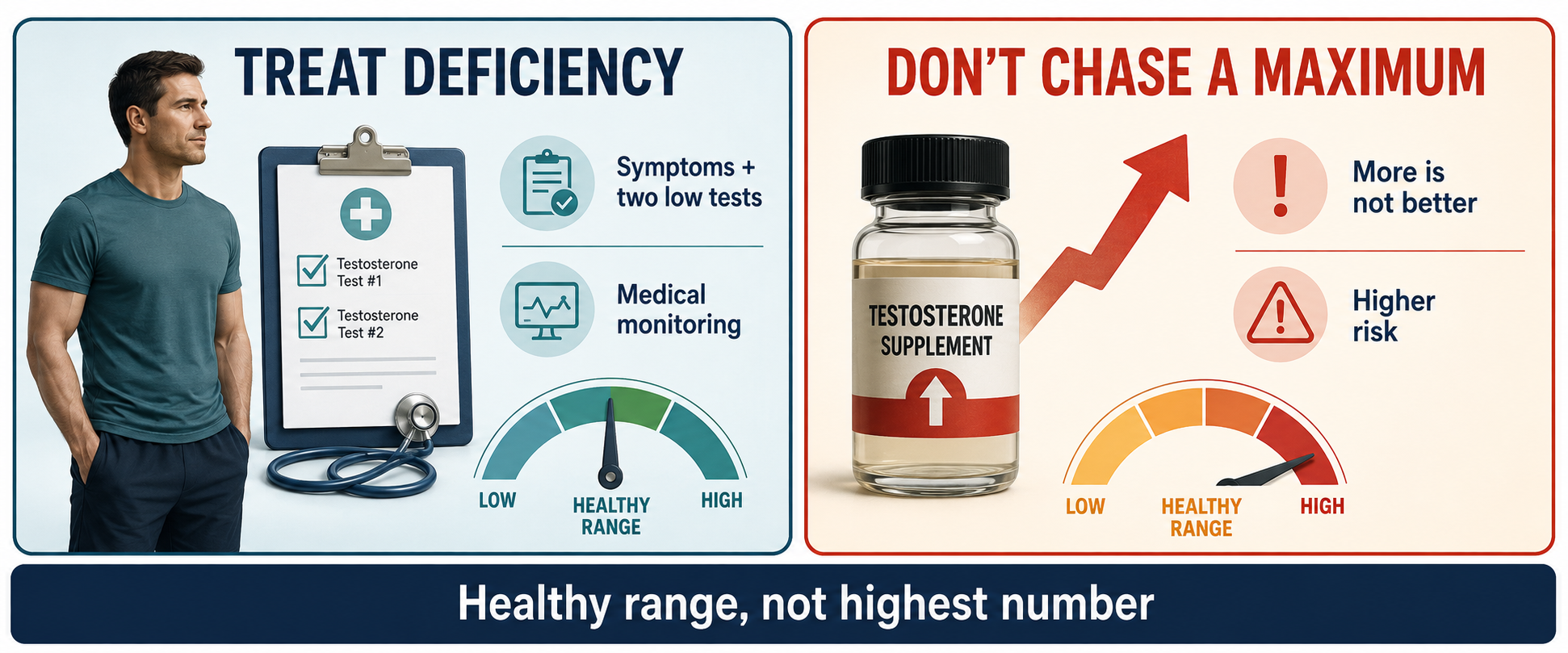
TRT in and of itself is not a fountain of youth, but it may help men who need it to return to a more normal, enjoyable life. With that said, testosterone treatment should only be used in men who have been diagnosed with hypogonadism – a condition characterized by low testosterone levels and symptoms that affect their quality of life.
A few days of low morning testosterone measurements in the clinic are not an adequate basis for TRT. Morning testosterone levels are naturally higher, and stress, lack of sleep, a low-calorie diet, and specific medications can all temporarily suppress testosterone. Testosterone treatment can be beneficial for men with documented hypogonadism in terms of improving libido, sexual function, anemia, bone density, and lean mass – and it may also increase vitality and mood, albeit inconsistently.
That’s all good, but enhanced vitality and quality of life are not the same as healthy longevity. If you’re looking to stave off chronic disease and premature aging, it’s a good idea to review other potential contributory factors – sleep, exercise, weight, and treating underlying conditions such as sleep apnea. Our guide to testosterone boosters can help you identify which aspects of your lifestyle may be responsible for low testosterone and how to address them.
What is “T-maxxing”?
“T-maxxing” is not an official medical term – rather, it’s something of an online slang for either increasing your testosterone levels to the absolute top of the normal range or actually going beyond that. It can also imply engaging in activities and behaviors that have been proven to increase testosterone – such as strength training, maintaining a healthy weight, and getting adequate sleep.
Some people – again, not without risks – engage in “T-maxxing” practices to raise their hormone levels for no particular reason beyond “feeling better.” The more dangerous practice, however, is using injectable testosterone, anabolic steroids, or other substances to increase testosterone levels beyond the normal range without a diagnosed hormone deficiency.
High doses of testosterone can cause several unwanted effects, including increased hematocrit and thickened blood, which can lead to cardiovascular disease. They can also promote the development of acne, hypertension, gynecomastia, and fluid retention. Exogenous testosterone suppresses endogenous testosterone production, which leads to reduced sperm count, testicular atrophy, and infertility – which is a serious concern for men who max out their T without consideration. Many men who start TRT are surprised to find that they can no longer conceive children and may need to consult a fertility specialist.
In general, the Endocrine Society does not recommend testosterone treatment for men who intend to have children in the near future. Men who are considering TRT should also discuss prostate cancer screening options with their doctor, as well as other potential risks based on their personal health history.
Should healthy men use TRT for longevity?
Healthy men should not use TRT to prolong their lifespan. Men with hypogonadism who want to improve their quality of life may be good candidates for TRT – under the supervision of their doctor. Testosterone treatment is aimed at reducing symptoms and restoring testosterone levels within the normal range, rather than maximizing or supermaxing hormone levels.
As far as healthy longevity goes, adopting a healthier lifestyle is more important than considering TRT. Not smoking, exercising, maintaining a healthy weight and good heart health, getting enough sleep, and undergoing preventive screening and tests are all proven methods of increasing lifespan.
TRT can be a wonderful tool in men’s healthcare, while “T-maxxing” can be a dangerous endeavor with little reward. There is no proof that either practice can directly contribute to longevity – but both can promote a healthier life and prevent some of the chronic diseases associated with low testosterone.